
The Cabinet Question Every Homeowner Eventually Faces
You open your kitchen cabinet and the hinge groans. The shelf sags under the weight of a few plates. The drawer sticks — again. You've been meaning to do something about your cabinets for a while now, but you keep going back and forth: should you reface them or replace them entirely?
It's one of the most common dilemmas Hollywood homeowners face when they start thinking about a kitchen upgrade. Refacing sounds cheaper and faster. Replacing sounds like a bigger commitment. But here's the thing — choosing the wrong option can cost you more in the long run, both in money and frustration.
Let's break down the real signs that your cabinets are past the point of a cosmetic fix and actually need to be replaced.
What's the Difference Between Refacing and Replacing?
Before we get into the warning signs, let's clarify what each option actually involves.
Refacing means keeping your existing cabinet boxes in place and updating the visible surfaces — doors, drawer fronts, and sometimes adding a veneer to the frames. The layout stays the same. The structure stays the same. You're essentially giving old cabinets a new outfit.
Replacing means removing the old cabinets entirely and installing new ones. This gives you the opportunity to change the layout, upgrade materials, add better storage solutions, and start with a structurally sound foundation.
Refacing works great when the bones are solid and you just want a fresh look. But when the bones are the problem, no amount of new doors will fix what's going wrong behind them.
Sign #1: The Cabinet Boxes Are Warped or Water-Damaged
South Florida humidity is no joke. In Hollywood and the surrounding areas, moisture can quietly wreak havoc on kitchen cabinets — especially the ones near the sink, dishwasher, or any plumbing connections.
If you notice any of these, refacing won't solve the problem:
- Swollen or bubbling particleboard on the bottom of cabinets
- Visible mold or mildew inside the cabinet box
- A musty smell that won't go away no matter how much you clean
- Soft spots in the wood when you press on it
- Staining or discoloration along the base or back panels
Water damage compromises the structural integrity of the cabinet. You can put a beautiful new door on the front, but the box behind it is still rotting. That's money wasted on a temporary fix.
Sign #2: Your Layout Doesn't Work for Your Life Anymore
Maybe your kitchen was designed in the '90s when the previous owner had different needs. Maybe you've started cooking more, or your family has grown, or you just realized that having zero counter space next to the stove is a daily annoyance.
Refacing can't change your kitchen layout. If you need to move cabinets, add an island, reconfigure the workflow between your sink, stove, and refrigerator, or simply want more storage in smarter places — that requires new cabinetry.
Many homeowners in Hollywood are living in homes built decades ago with layouts that don't reflect how people actually use kitchens today. Custom cabinetry lets you design around your real habits instead of working around someone else's old floor plan.
Sign #3: The Shelves and Drawers Are Failing
Drawers that stick, shelves that bow, doors that won't stay closed — these aren't just cosmetic issues. They're signs that the internal hardware and the material itself are wearing out.
If your cabinet interiors are made from low-grade particleboard or thin plywood, there's a limit to how many times you can re-drill hinges or reinforce shelves before the material just gives up. When the structural components are failing, replacement is the more cost-effective long-term decision.
Sign #4: You're Planning Other Major Kitchen Upgrades
Here's where the math starts to matter. If you're already planning to replace countertops, install new flooring, or update your kitchen's plumbing or electrical, it often makes more sense financially to replace the cabinets at the same time.
Why? Because:
- New countertops need to be templated to fit the cabinets — if the cabinets aren't level or square, you'll have problems
- Flooring installation is easier and cleaner when cabinets are removed
- Electrical or plumbing changes behind walls are much simpler to do during a full renovation
Bundling these projects together with a general contractor saves time, reduces disruption, and usually costs less than doing each project separately over several years.
Sign #5: The Cabinets Are Older Than 20 Years
There's no hard expiration date on kitchen cabinets, but most builder-grade cabinets start showing serious wear between 15 and 25 years. If your cabinets are in that range and you're already seeing some of the signs above, replacement is likely the smarter investment.
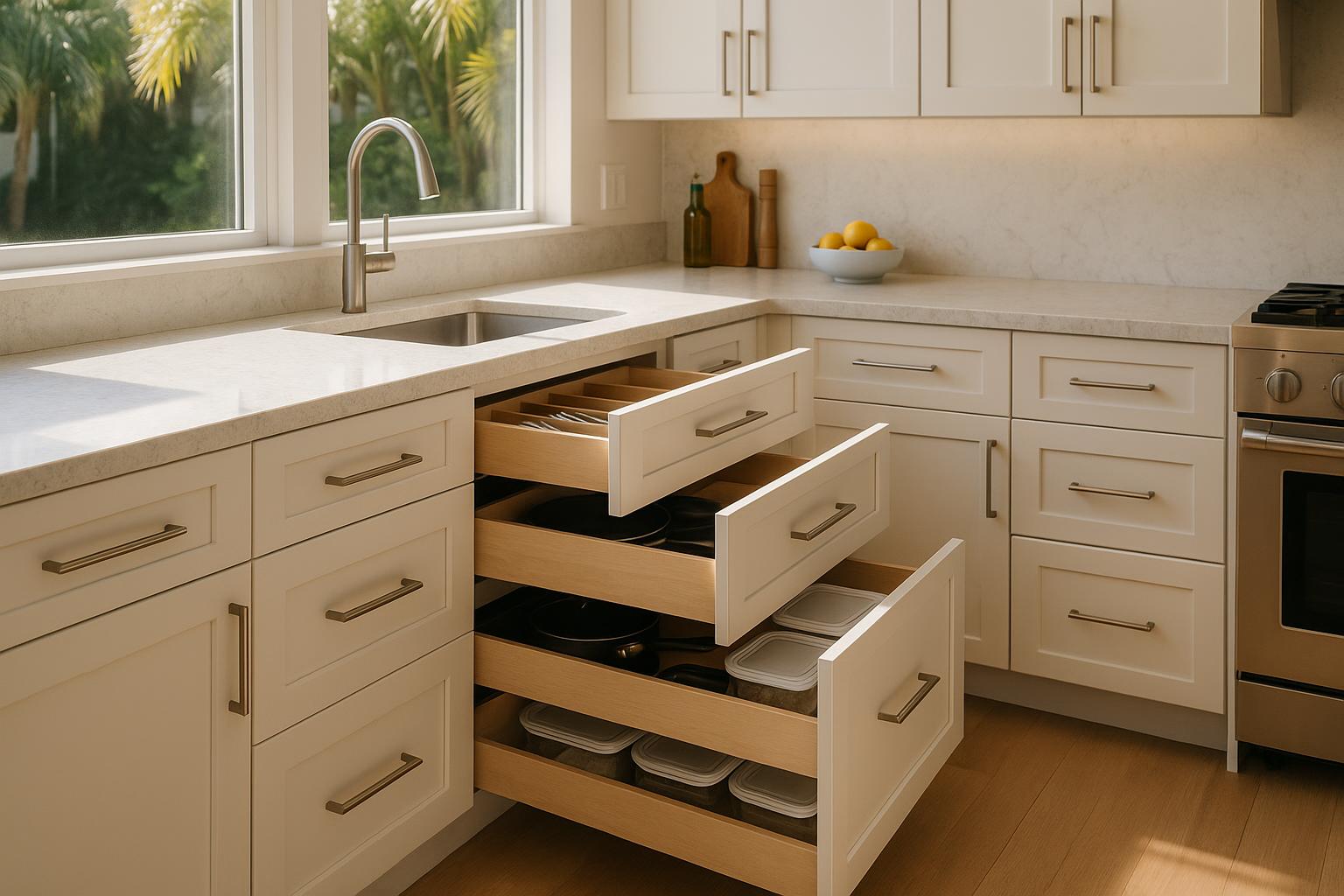
Modern cabinetry — especially custom-built options — uses better materials, better hardware, and better construction methods than what was standard even a decade ago. Soft-close hinges, full-extension drawer slides, and moisture-resistant materials come standard in quality cabinet builds today.
What About the Cost Difference?
Yes, replacing cabinets costs more upfront than refacing. But the gap isn't always as dramatic as people assume, especially when you factor in the lifespan of the result.
A refacing job on cabinets that are already compromised might buy you three to five years before you're dealing with the same problems again. A full replacement with quality custom cabinetry can last 20 to 30 years with proper care.
When you look at cost per year of use, replacement often wins — and it adds significantly more value to your home if you ever decide to sell.
How to Decide What's Right for Your Kitchen
Here's a simple framework:
- Inspect the cabinet boxes honestly. Open every door, pull out every drawer, and look at the material behind the faces. Is it solid? Level? Dry?
- Think about your layout. Does your kitchen work for you right now, or are you constantly frustrated by the flow?
- Consider your other plans. Are countertops, flooring, or appliances also on the list? If so, a full renovation makes more sense.
- Get a professional opinion. A good contractor will tell you honestly whether refacing is viable or whether you'd be throwing money at a short-term fix.
At Valor General Contractors, we walk Hollywood homeowners through this exact decision all the time. We look at what you've got, listen to what you need, and give you a straight answer about what makes sense for your home and your budget.
Your Cabinets Set the Tone for the Entire Kitchen
Cabinets take up more visual space in your kitchen than almost anything else. They also do the most work — holding everything you use every single day. When they're not functioning well, your entire kitchen experience suffers.
If you're seeing the signs we've talked about here, don't keep putting it off. Whether you're in Hollywood, Fort Lauderdale, Pembroke Pines, or anywhere nearby, getting an honest assessment is the first step toward a kitchen that actually works the way you need it to.